Beyond the Flyer: 5 High-Impact Ways to Advocate for Science-Based Pet Laws in Summit County
We have momentum. Pet owners across Kamas and Park City are waking up to the reality that our current rabies ordinances are outdated and potentially harmful to our senior and fragile companions.
Many of you have already signed the petition and shared our flyers on Facebook. Thank you. That baseline awareness is crucial.
But to move the Summit County Board of Health, we need more than clicks; we need community saturation. We need this topic to be discussed on trails, at vet offices, and in neighborhood meetings. We need to reach the pet owners who aren’t on social media every day.
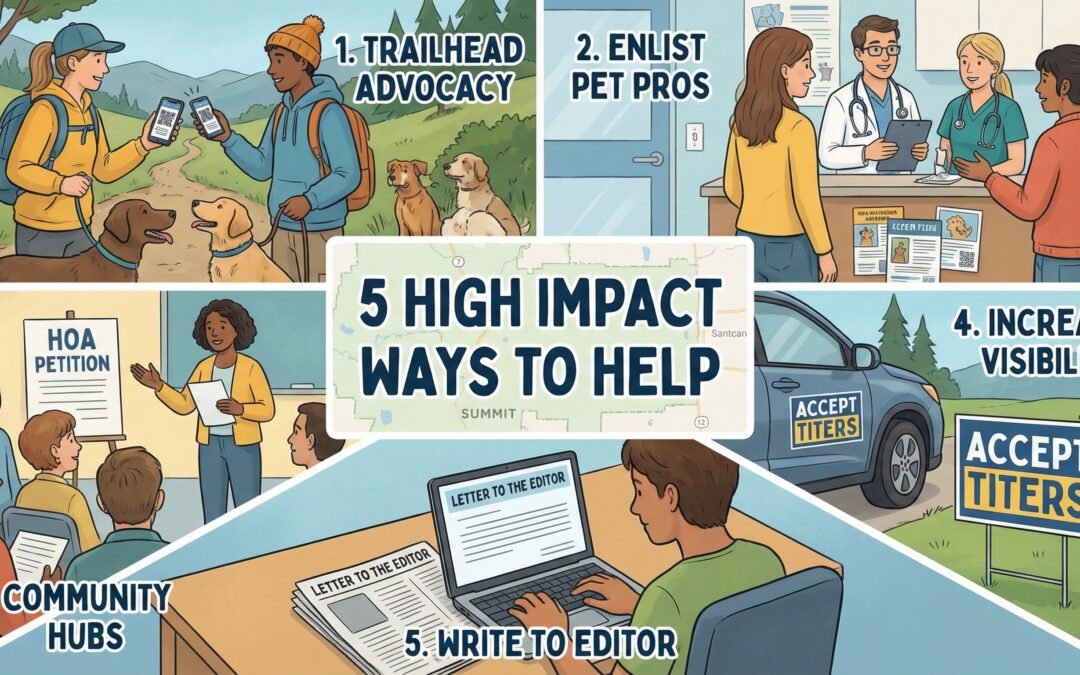
If you are ready to take the next step in advocacy, here are five high-impact ways you can help spread the word about the Titer Test Initiative without relying solely on social media.
1. The “Trailhead & Dog Park” Strategy
In Summit County, our social lives often revolve around where we walk our dogs. These are the best places for organic, persuasive conversations.
When you are at the dog park or passing someone on a trail, and the conversation naturally turns to your dogs’ ages or health, mention the initiative.
-
The Tactic: Don’t just talk about it—be ready to act. Save the photo of our flyer’s QR code to your phone’s “favorites” album. When you are talking to a receptive neighbor on the trail, say, “We’re trying to get the county to update the laws for senior dogs like yours. You can actually sign the petition right now if you scan this on my phone.” Capture that signature in the moment.
2. Enlist Your “Pet Pro” Team
Veterinarians, groomers, dog walkers, and pet sitters are the trusted advisors of the pet community. They see the animals who are most negatively affected by over-vaccination.
-
The Tactic: Next time you see your groomer or walker, ask them if they are aware of the initiative. If they are supportive, ask if they would be willing to keep a few flyers at their reception desk or mention the petition to clients with elderly pets.
-
The Vet Conversation: Have an open dialogue with your own vet. Ask them their stance on titers. If they support science-based protocols, ask how we can best amplify that professional opinion to the County Board versus just pet owner opinion.
3. Utilize Hyper-Local Community Hubs (HOAs and Nextdoor)
While we are moving beyond general social media, hyper-local digital networks like Nextdoor remain powerful for specific neighborhood organizing. Furthermore, physical community gatherings are untapped resources.
-
The Tactic (Physical): Does your HOA or neighborhood association have upcoming meetings? Ask for 5 minutes during the “new business” or open comment section to briefly explain why this matters to neighborhood pet safety and health, and have a sign-up sheet ready.
-
The Tactic (Digital): On Nextdoor, post a personal story about your specific senior pet and why you are worried about an unnecessary booster. Personal testimonials from a direct neighbor are far more persuasive than a generic campaign graphic.
4. Visibility in the Physical World: Yard Signs and Car Decals
Summit County is a driving community. We pay attention to what is on the back of the Subaru in front of us at the stoplight.
-
The Tactic: We are looking into printing small batches of yard signs and magnetic car decals with a simple message like: “Science over Schedules. Accept Titers for Summit County Pets.” (If you are interested in displaying one of these, please contact us so we can gauge demand). High visibility in residential areas normalizes the conversation.
5. The Old-Fashioned “Letter to the Editor”
Never underestimate the power of the local paper. City councils and Health Boards read letters to the editor to gauge the temperature of the community on niche issues.
-
The Tactic: Write a short (200 words or less), passionate letter to the Park Record or other local outlets. Focus on your personal experience as a responsible pet owner who wants to follow science, not outdated rules. A published letter gives the cause immense credibility.
We Are the Tipping Point
Changing the law requires showing the Board of Health that this isn’t just a small group of vocal activists, but a widespread consensus among responsible Summit County residents.
Every conversation you have on a trail, every email to your HOA, and every conversation with a groomer adds up to undeniable pressure for change.
Let’s get to work.